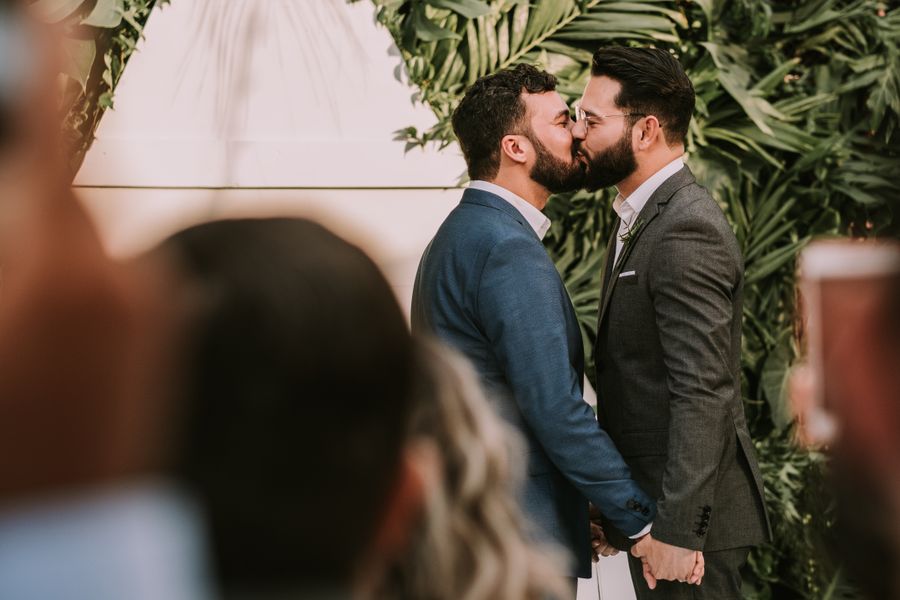
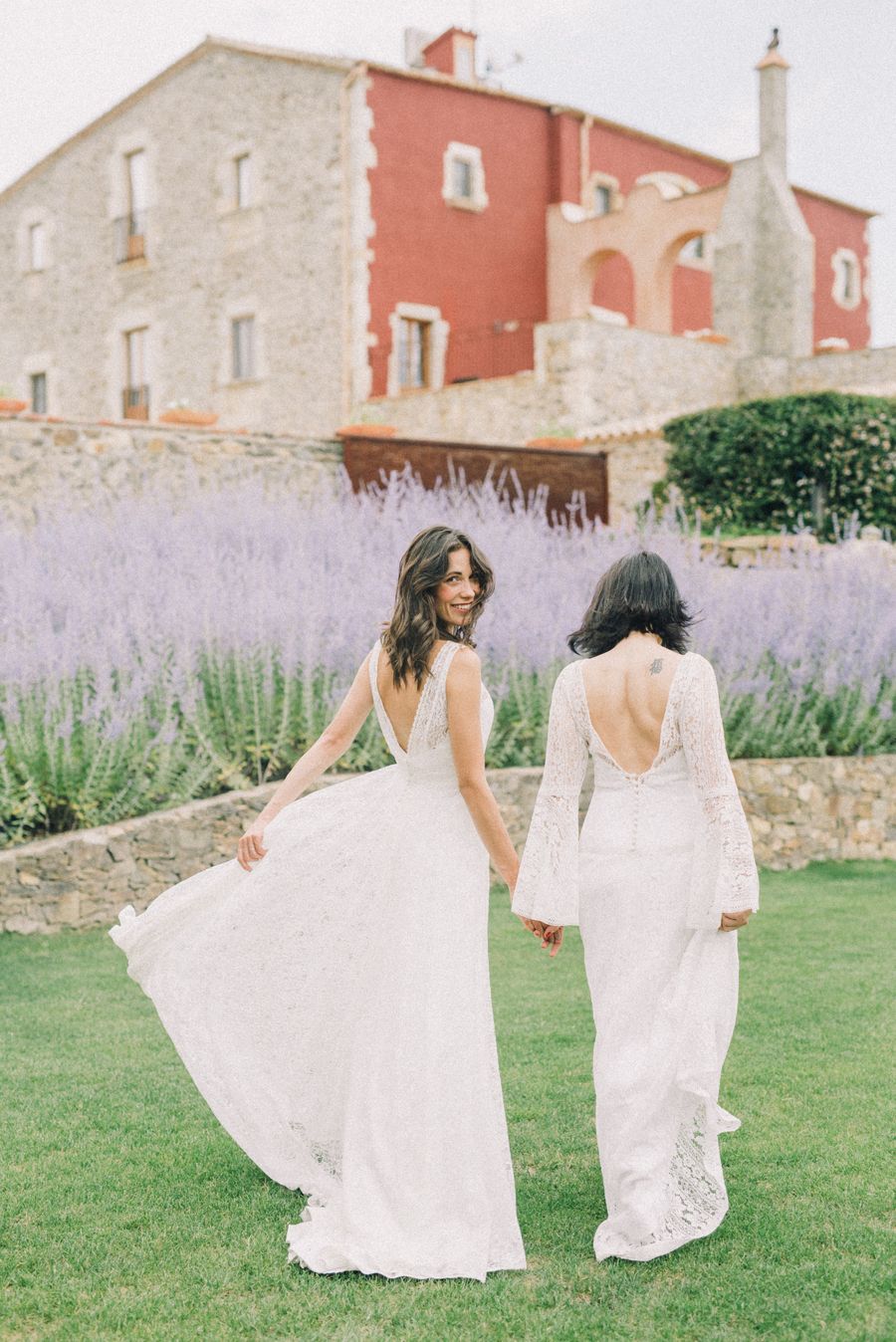
Legal at home, symbolic abroad: how split ceremonies work
Sign the papers at home, celebrate anywhere in Europe. How a split ceremony works, what to do first, and how to make both parts feel real.

In this note
Many of the weddings we photograph in Europe are, legally speaking, not weddings at all. The couple signed the papers at home a few days or a few months earlier, and what we photograph is the celebration: the vows, the rings, the people, the party. Nobody at the table thinks of it as anything less than the real thing.
This is often called a split ceremony: legal at home, symbolic abroad. Here’s why so many couples choose it, how to plan the two parts, and how to make both of them feel like they count.
Why couples split it
- Paperwork. Many European countries only marry citizens or residents. Where visitors can marry, there are usually notice periods, apostilles, sworn translations and sometimes an appointment in person weeks before. A legal ceremony at home skips all of that.
- Recognition. A marriage made at home is registered at home. There’s nothing to transcribe, translate or explain later.
- Freedom. A symbolic ceremony can happen anywhere: a clifftop, a vineyard, a friend’s garden, a beach at seven in the morning. No approved-venue list, no registrar’s timetable, no fixed wording.
- The words are yours. You choose who leads the ceremony and what gets said. It can be a professional celebrant, a close friend or a family member.
If your home country doesn’t have marriage equality, the split can work the other way round: a legal wedding in a country that allows it, such as Denmark, and the celebration somewhere else. Our Travel Note on where same-sex couples can legally marry in Europe covers the options, including the 2025 EU court ruling on recognition.
Which comes first?
There’s no rule, but most couples do the legal part first, anywhere from a few days to a few months before. That way, the celebration is the full stop rather than a preview, and there’s no paperwork hanging over the trip.
Doing the legal part afterwards works too. Just be aware that your legal wedding date will be the later one, which can matter for visas, insurance, name changes or anything else tied to that date.
Then there’s the anniversary question. Many couples celebrate the day with the people and the party, and quietly remember the other one. Some celebrate both. It’s entirely up to you.
Making the legal part feel like something
It’s easy to treat the registry office as admin. You don’t have to. Even a fifteen-minute signing can be a lovely half day:
- Bring the people you want there. Two witnesses, your parents, your best friends, or nobody else at all.
- Wear something you like. It doesn’t need to be the outfit for the big day.
- Plan something afterwards. A long lunch, a walk, a drink in your favourite place.
- Get a few photos. A friend with a good phone is fine. If the signing happens in Europe, we can cover it by the hour too.
Some couples keep the legal date private and don’t tell their guests. That’s fine too.
The symbolic ceremony
A symbolic ceremony can look exactly like any other wedding ceremony, or nothing like one. Most include a few familiar parts:
- A welcome, and a few words about the two of you.
- A reading, a song, or a friend saying something.
- Your vows. This is where personal words shine.
- The rings. Some couples wait to wear them until this moment, even after the signing.
- A kiss, applause, and the walk back down the aisle.
Some couples add a ritual: handfasting, a wine or sand ceremony, signing a keepsake certificate. Others keep it to fifteen minutes and get to the drinks.
Do you need to tell guests you’re already married? Not unless you want to. Some couples mention it on the invitation, some let the celebrant say it lightly, and many don’t mention it at all.
Practical notes for the day
- Venues still have rules: music curfews, confetti, candles, how late you can stay.
- Public places may need permission. A ceremony on a public beach or in a park can require a permit from the local municipality. Your planner or venue usually knows.
- Have a Plan B for weather. Without a registrar’s slot to keep, it’s easier to move a ceremony indoors or wait out a shower.
- Sound matters. If you’re having a film, small microphones on the two of you or your celebrant make sure the vows are clear.
Use your freedomWith no registrar’s timetable, you can set the ceremony time around the light. Two to three hours before sunset gives you soft light for the ceremony and golden hour during dinner.
How we photograph both parts
We photograph a symbolic ceremony exactly as we would a legal one: quietly, without flash, with as much attention on your guests’ faces as on yours. For the legal part, an hourly booking is usually enough; on our pricing page you’ll see hourly coverage starts at €1,490 for up to five hours.
Some couples bring their registry-office photos and we add a few frames of the certificate or the rings to the celebration gallery, so the whole story lives in one place.
A short legal note
Symbolic ceremonies generally need no legal paperwork, but rules for legal marriages, at home or abroad, change over time and depend on your nationality. Check with your local registry office, and if you’re marrying legally in another country, with that country’s registry office and your own embassy or consulate.
When you fill in our invitation form, there’s a field for “Legal, symbolic or not sure”. Pick whichever is true and tell us about your plans; we’re happy to talk it through.